
TRT: What’s the Right Dosing Schedule and Amount For You?
Written by: LowT Center Clinical Team
Medically reviewed by: Michael Seay, MSN, APRN, FNP-BC
Posted: Feb 11, 2026
Updated: Feb 23, 2026
Our providers often hear questions like, “What is a normal weekly dose of testosterone?” or “How much testosterone should I be taking?” They’re good questions, but the answers aren’t as straightforward as they might seem.
The reality is that your dosing amount and the frequency of when you take testosterone heavily influence your results and potential side effects. Finding your number is one of the most important parts of testosterone therapy.
Testosterone dosing isn’t like taking a daily vitamin. Two people can take the same amount and have very different experiences, both in how they feel and how their bodies respond.
That’s why working with a medical provider matters. Proper guidance includes regular lab testing, ongoing monitoring, and correct adjustments over time. We’ll break down how dosing is determined, why cycle timing matters, and what helps make testosterone therapy safer and more effective long term.
Summary
- The right testosterone dose depends on individual factors such as symptoms, lab results, body composition, and personal goals. There isn’t a single dose that works for everyone.
- At Low T Center, providers typically start within a clinically appropriate range and adjust gradually over time. Many men may begin with a 200 mg weekly injection, with smaller adjustments made as lab results and symptoms are reviewed. To make weekly dosing easier, Low T Center also provides prefilled syringes to remove the guesswork and help patients stay consistent with therapy.
- How often testosterone is taken matters just as much as how much is taken. A consistent 7-day dosing schedule helps support steadier hormone levels and better long-term consistency. Daily dosing (micro-dosing) can increase the risk of missed doses, while spacing doses too far apart may lead to hormone fluctuations that affect energy, mood swings, focus, and physical progress.
- Ongoing lab testing and provider oversight help ensure treatment stays safe, effective, and tailored to the person.
How Much Testosterone Should You Take in a Week?
There isn’t one weekly dose of testosterone that works for everyone. Several personal factors influence how your body responds to therapy. Once those factors are understood, finding the right dose becomes much easier.
Here are some of the key things providers consider when determining testosterone dosage:
Your age
Testosterone levels naturally change with age (usually declining after 30), and so does how your body processes hormones. A dose that works well for someone in their 30s may not be appropriate for someone in their 50s or 60s.
Your lifestyle and diet
Sleep quality, stress levels, alcohol use, exercise habits, and overall nutrition all affect how testosterone works in your body. Someone who’s highly active with good recovery habits may respond differently from someone dealing with chronic stress or poor sleep.
Your lab results and health history
Blood work plays a key role in safe and effective dosing. Providers look at markers like red blood cell count and other indicators of how your body is responding. Factors like cardiovascular concerns, sleep apnea, or prior reactions to hormone therapy can influence both the starting dose and how closely therapy is monitored.
Your symptoms
Your initial symptoms and how you feel matter. Low energy, low libido, brain fog, or changes in body composition all help providers understand how much hormone support your body may need.
Your body composition
Factors like body fat percentage and muscle mass can influence how testosterone is absorbed and used. This is one reason two people on the same dose can have very different outcomes.
Your goals
Someone focused on improving energy, mood, and libido will typically need a different approach than someone aiming to improve performance or someone who has bodybuilding goals.
Your comfort level and preferences
Some people prefer starting at a standard dose, while others feel more comfortable taking a slower, more gradual approach.
Method of delivery
Injections, gels, pellets, and other delivery methods absorb differently and can affect how steady your levels feel throughout the week. The method used often influences both the dose and the frequency.
Once you establish these factors, dosing becomes much clearer. The goal isn’t to achieve a specific number but to find a dose that supports how you feel, how your symptoms improve, and how your body responds.

What is a Normal Dose of Testosterone for Injections?
In practice, providers often start within a clinically appropriate range and adjust based on how the body reacts. At Low T Center, that starting point is often around 200 mg of testosterone per week, though the exact dose depends on the individual’s baseline levels, health history, and goals.
After a few weeks, once your levels have settled, your provider may make small dose adjustments, often 10–40 mg at a time, based on your lab results and, just as importantly, how you’re feeling week to week.
To make weekly dosing even easier, Low T Center also provides prefilled syringes that are delivered directly to your home. This removes the need for measuring doses, using calculators, or worrying about drawing the correct amount each time.
By simplifying the process, patients are more likely to stay consistent with therapy.
In the end, your provider shouldn’t be referring to your lab report to determine the correct treatment. They should be treating you. How you feel, how your symptoms change, how your body responds, and how therapy fits into your lifestyle. That’s what helps determine the most effective and safest dose.
This is also why close monitoring is essential, especially early in therapy, so adjustments can be made carefully rather than guessing.
How Often Should You Take Testosterone?
How frequently you take testosterone matters just as much as the amount you take.
At Low T Center, we prioritize a consistent 7-day dosing schedule because it supports steadier hormone levels, simpler monitoring, and better long-term consistency.
Why consistency matters
Some dosing schedules extend to 10–14 days, while others, like micro-dosing, involve taking smaller amounts more frequently. While neither approach is inherently wrong, more complex or frequent schedules can be harder to maintain consistently in real-world settings.
Missed or delayed doses may lead to uneven hormone levels, which can show up as dips in energy, increased brain fog, or stalled physical progress.
One of the biggest concerns providers have with micro-dosing is consistency. Research shows that as dosing frequency increases, patients tend to miss their doses more.
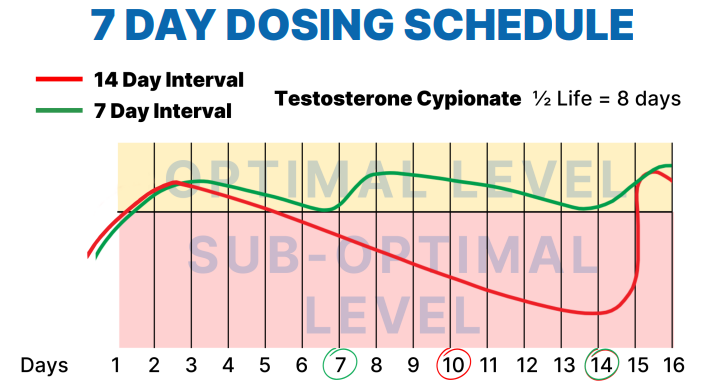
On the other end of the spectrum, spacing doses too far apart, such as every 10–14 days, can create a different issue. Testosterone levels tend to rise quickly after an injection and then gradually decline, leading to wider peaks and deeper drops.
Research also shows that larger gaps between doses are associated with greater hormone fluctuations, which may lead to mood swings and affect things like your energy, focus, and overall symptom control. Some men feel good shortly after an injection, followed by a noticeable drop before the next dose.
A weekly routine strikes a balance. It aligns more closely with how the body processes testosterone, helps reduce dramatic swings, and makes therapy easier to plan around over time.
How the 7-Day Dosing Cycle Works
This chart shows how testosterone levels rise and fall depending on how often injections are given. Weekly dosing helps keep levels more stable over time. Longer gaps between doses can lead to higher peaks followed by deeper drops, which may affect energy, mood, and symptom control.
Choosing A Dose That’s Right for You
Testosterone therapy is most effective when it’s personalized, consistent, and closely monitored. The right dose and schedule depend on how your body responds, not just where your levels start. With proper testing, thoughtful adjustments, and medical guidance, it’s possible to support hormone health in a way that feels sustainable and aligned with your life.
If you’re considering testosterone therapy or have questions about dosing, frequency, or monitoring, working with a provider who takes a patient-first approach can make all the difference.
Schedule a consultation at a Low T Center clinic near you to learn more.
Sources
- https://academic.oup.com/jcem/article/103/5/1715/4939465?login=false
- https://pubmed.ncbi.nlm.nih.gov/11760042/
- https://academic.oup.com/edrv?login=false
- https://pubmed.ncbi.nlm.nih.gov/12831506/
Micheal Seay, MSN, APRN, FNP-BC

Related Posts
Disclaimer: This article is made available for general, entertainment and educational purposes only. The opinions expressed herein do not necessarily reflect those of Low T Center. You should always seek the advice of a licensed healthcare professional.