News
News
Peptides vs TRT: Which One is Right for You?
Posted: February 3, 2026
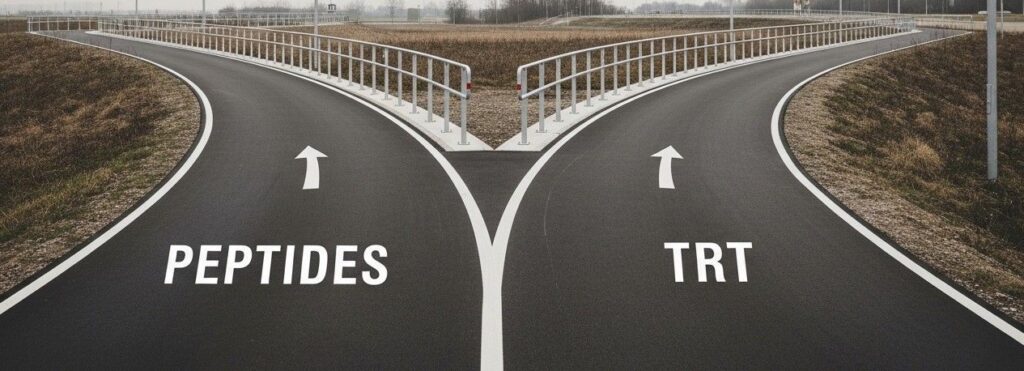
In 2025 – 2026 wellness space, few topics have gained as much attention as peptide therapy. Peptides like Sermorelin and PT-141 have emerged as options to improve specific symptoms of aging, like decreased energy, metabolism, and libido.
Now, peptide stacks (combinations of two or more peptides) are even being considered as alternatives to TRT (testosterone replacement therapy). And on the surface, it makes sense. Why choose TRT when you could target specific symptoms of low testosterone through peptide therapy?
So, what is the better option for someone with low testosterone? TRT or peptide stacking?
Turns out, that depends on quite a few factors. So, let’s take a look at TRT vs. peptide stacks such as Sermorelin and PT-141 and see which one makes sense for you.
Summary
- TRT replaces testosterone directly and often works faster, with many people noticing changes within 2–3 weeks across energy, strength, mood, and libido.
- Peptides signal the body to support its own hormone production, offering a more targeted approach.
- TRT may make sense when testosterone is clinically low and symptoms are broad, while peptides may be better suited for specific concerns.
- In some cases, providers may use both together to support recovery, balance, or tolerance.
- The right option depends on goals, health history, and individual response, which is why medical guidance and monitoring matter.
Table of Contents
ToggleWhat Is Difference Between TRT and Peptides?
Forms of peptides & TRT
TRT and peptide therapy can be offered in the form of injections, oral, pellets, or gel options. At Low T Center injections are commonly used because they allow for more consistent delivery and better control over-dosing.
What is testosterone replacement therapy?
Testosterone replacement therapy involves delivering testosterone into the body. This improves testosterone levels by directly acting as substitute for testosterone the body is no longer producing on its own.
What is peptide therapy?
Peptide therapy involves delivering amino acids into the body. Rather than replacing hormones, these amino acids put out signals that tell the body to produce hormones, like HGH (human growth hormones) which is what Sermorelin is known for.
While TRT and peptides can have overlapping benefits, the main difference comes down to how they work and how your body responds over time.
TRT Pros & Cons
Pros
- Directly replaces testosterone, which often leads to more noticeable and faster symptom improvement.
- Addresses several symptoms at once, such as energy, mood, strength, libido, and body composition.
- Often more cost-effective than peptide therapy over time.
Cons
- May carry a higher risk of side effects.
- Can temporarily suppress the body’s natural testosterone production while on therapy.
- May impact fertility during treatment.
- Can increase red blood cell count and cardiovascular risk.
Peptides Pros & Cons
Pros
- Indirectly supports the natural production of testosterone by improving sleep quality, recovery, and muscle repair.
- More targeted benefits, making peptides a good option for people focused on specific goals.
- Shorter-acting and milder side effects.
Cons
- Results tend to be more gradual, often taking 6–12 weeks to become noticeable.
- Does not raise testosterone levels directly, which means it may not fully address symptoms caused by clinically low testosterone.
- May require multiple peptides (stacking) to address more than one concern, which can be more costly.
Considerations for Peptide Therapy vs. TRT
TRT can work faster, address a wider range of low-testosterone symptoms, and may even cost less than peptide therapy. But how your body responds once treatment begins matters just as much.
Some people need additional evaluation before starting TRT, particularly if they have any prostate concerns, elevated red blood cell counts, untreated sleep apnea, or other health considerations.
This is why our providers carefully review medical history, symptoms, and lab work before recommending TRT, and continue monitoring along the way.
TRT can affect the body’s natural testosterone and sperm production while therapy is ongoing. However, for many men, natural production often begins to return after they stop treatment, especially when properly monitored and managed.
Peptide therapy isn’t risk-free; however, it lasts shorter within your body and has milder side effects than TRT. Typical short term side effects associated with peptides can include minor headaches, fatigue, or digestive issues.
Ultimately, the right approach depends on your goals, your health history, and how your body responds. In some cases, that might mean TRT. In others, peptides. And sometimes, a carefully considered combination of both.
Using TRT and Peptides Together
Because testosterone replacement therapy and peptide therapy support the body in different ways, providers may sometimes consider using them together, depending on individual goals and bodily response.
For example, Sermorelin may be used alongside TRT to promote better recovery and body composition. While your hormones support a healthy metabolism, the peptides can promote muscle recovery, for better overall well-being.
Peptides can also be used alongside TRT to improve side effects and promote balance. For example, when testosterone levels rise, estrogen levels can rise as well. Providers may consider adding Sermorelin to help counter the increased estrogen.
The goal of combining peptides and TRT often includes balancing changes that are happening to the body or optimizing results.
Finding The Best Treatment That Works for You
Overall, TRT can be a strong option for those looking for longer-term, consistent results. It’s often more budget-friendly than peptide therapy and may be a good fit for men who are less concerned about fertility considerations.
Peptides can be a good option for those looking to support the body’s natural testosterone production. They offer a more targeted approach that may help address specific symptoms, often with fewer side effects than TRT, depending on your response.
At Low T Center, our care begins with comprehensive lab testing and a thoughtful conversation about symptoms, health history, and personal goals. From there, medical providers develop a personalized plan that may include TRT, peptide therapy, or both. Progress is monitored through regular follow-ups and lab reviews, allowing care to evolve as the body changes.
Sources
- https://www.webmd.com/a-to-z-guides/what-are-peptides
- https://pmc.ncbi.nlm.nih.gov/articles/PMC7108996/
- https://sflmedicalgroup.com/blog/peptides-trt/
- https://www.innerbody.com/beginners-guide-to-peptide-therapy
Related Posts
TRT: What’s the Right Dosing Schedule and Amount For You?
Disclaimer: This article is made available for general, entertainment and educational purposes only. The opinions expressed herein do not necessarily reflect those of Low T Center. You should always seek the advice of a licensed healthcare professional.