Winter ED: 5 Reasons It’s “Harder” to Get an Erection During Wintertime

Written by: LowT Center Clinical Team

Medically reviewed by: Michael Seay, MSN, APRN, FNP-BC

Posted: Nov 3, 2026

As the seasons change and colder weather begins to settle in, you may notice your body changing along with it. Maybe you’re getting sick more often, your hands and feet seem to lose circulation, or you’re finding it harder to get out of bed in the morning.

Well, there’s another issue some men may experience but aren’t so quick to talk about: erectile dysfunction in the winter, also known as winter ED.

That’s right. You can add the colder months to the long list of factors that may contribute to erection difficulties, making getting harder, well, harder.

The good news? If you only seem to experience ED during the winter months each year, seasonal changes in your health or daily habits might be contributing. And depending on the cause, the solution could be simpler than you think.

So, why might it be more difficult to get or maintain an erection in winter? Let’s explore five possible reasons and what you can do to support healthier erections this season.

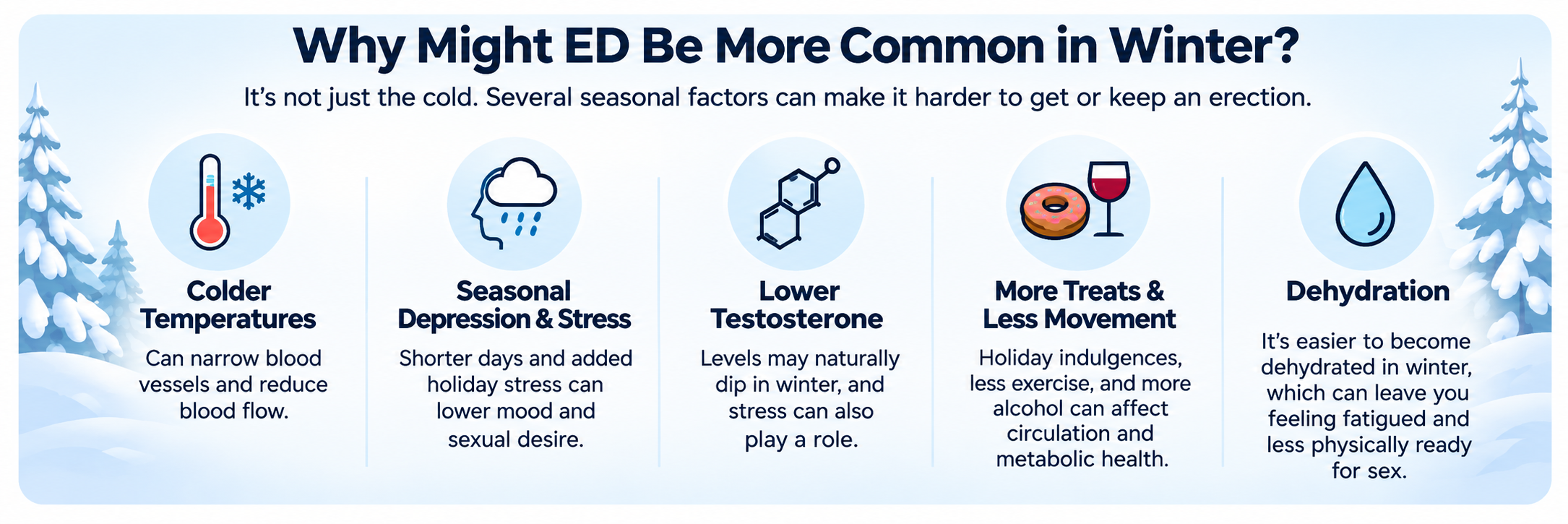
Summary: Why Does Winter Affect Erectile Function?

  • Cold temperatures and blood circulation: When you're cold, your blood vessels naturally narrow to help conserve body heat. Since erections depend on healthy blood flow, temperature-related changes may temporarily affect erectile function.
  • Seasonal depression and stress: Shorter days, reduced sunlight, and seasonal affective disorder (SAD) can affect your mood, motivation, and sexual desire.
  • Testosterone fluctuations: Research suggests testosterone levels may fluctuate seasonally. Holiday stress and prolonged elevations in cortisol may also affect hormone production and sexual health.
  • Less movement and more holiday indulgence: Spending more time indoors, exercising less, drinking more alcohol, and changes in eating habits can affect the cardiovascular and metabolic health that supports erections.
  • Dehydration: Cold weather can make it easier to overlook hydration. Although dehydration isn't a well-established direct cause of ED, significant fluid loss can affect circulation and how you feel physically.

The important distinction is that occasional erection difficulties aren’t necessarily a sign of a serious problem. However, if they continue, they may point to an underlying issue involving circulation, cardiovascular health, hormones, medication, or something else worth checking.

1. Poor Blood Circulation

When the temperature drops, your body gets cold. And when your body gets cold, it goes into a sort of survival mode.

Think of it as the nerve endings in your skin yelling upstairs to your brain, “Hey, we need to keep the important stuff warm!”

Essentially, your sympathetic nervous system springs into action. Blood vessels near the surface of your skin begin to narrow, a process known as **vasoconstriction**. This helps limit heat loss and maintain your body’s internal temperature.

That’s why your fingers, toes, and other exposed areas can feel especially cold in winter.

So, what does this have to do with erections?

Well, getting and maintaining an erection requires blood vessels in the penis to relax and allow more blood to flow into erectile tissue. When you’re exposed to cold temperatures, your body’s natural response is to narrow certain blood vessels rather than encourage increased blood flow.

Therefore, if you’re already dealing with circulation problems, high blood pressure, diabetes, or cardiovascular disease, those underlying conditions can make ED more likely to occur regardless of the season.

Many men don’t realize that issues with erections can sometimes be an early warning sign of cardiovascular disease. That’s because the blood vessels involved in erections are relatively small, so problems with blood flow may become noticeable there before other symptoms appear.

What Can Help?

Natural Solution

Warm Up & Get Moving

Give your body time to warm up and stay active, whether via hot tea or layering up to support healthy circulation.

Medical Solution

ED Medication

Tadalafil or sildenafil may help improve erectile blood flow when prescribed by a provider.

Winter Factors Affecting Erectile Health

2. You Get SAD (Seasonal Affective Disorder)

For some, the shorter, darker days of winter can bring on more than an occasional bad mood. They can contribute to seasonal affective disorder (SAD), a form of depression that follows a seasonal pattern. 

You might notice yourself feeling more tired, less motivated, withdrawn, or simply not as interested in things you usually enjoy. 

That can include everyday activities, spending time with loved ones, and, in this case, sex. 

Here’s why that matters. Sexual arousal isn’t just a matter of good blood flow. Your brain also influences your sexual desire, excitement, and the signals that help produce an erection. 

When you’re dealing with depression, anxiety, or stress, these processes can be affected. This can lead to a lower sex drive, difficulty becoming aroused, or trouble maintaining an erection. 

On top of that, some antidepressant medications used to manage these symptoms can contribute to sexual side effects, including erectile difficulties.

What Can Help?

Natural Solution

Get More Daylight

Spend time outdoors during daylight hours, maintain a consistent sleep schedule, stay active, and make time for social activities to support your mood and mental health.

Medical Solutions

PT-141 & TRT

PT-141: Although FDA-approved for women, PT-141 has also been studied in men for its potential to support sexual arousal and erectile function.

TRT: Low testosterone can affect mood, energy, and sex drive. For men with clinically low levels, TRT may help improve these symptoms.

Various logos of insurance companies that low t center accepts

3. Your Testosterone Levels May Be Dropping

The winter months often mean holidays, family gatherings, and plenty of reasons to celebrate. But unfortunately, all that holiday cheer can also come with a fair share of stress, anxiety, and obligations. 

Between buying gifts, managing finances, dealing with family, and keeping up with social obligations, it’s easy to feel overwhelmed. 

And as a result, your testosterone levels may be feeling the effects, too. 

When you’re stressed, your body releases cortisol, often called the stress hormone. While cortisol helps your body respond to stressful situations, prolonged stress can interfere with the hormonal processes involved in testosterone production. 

A study examining seasonal testosterone levels found that men had their highest average testosterone levels between August and October, with levels gradually declining to their lowest point in March. 

Although researchers haven’t established exactly why these seasonal changes occur, the findings suggest that testosterone levels aren’t necessarily the same throughout the year. 

So, what does this mean for your erections? 

Testosterone impacts sexual desire and erectile function. When your levels are clinically low, you may experience reduced libido, fatigue, and difficulty with erections. 

What Can Help?

Natural Solution

Manage Your Stress

Make time for exercise, quality sleep, and relaxation during the busy holiday season. These habits can help manage stress and support healthy hormone function.

Medical Solution

Check Your Testosterone

Men's testosterone levels gradually decline after age 30, which can affect sex drive and energy. A blood test can confirm whether your levels are low, and if so, TRT may help improve libido and other symptoms.

4. Too Many Treats and Not Enough Movement

Wintertime also means holiday season. And the holidays can be a great excuse to kick back, stay inside, binge your favorite show, and enjoy a few extra helpings of your favorite food. 

Nothing wrong with enjoying yourself. The problem comes when a few indulgent days turn into several months of barely moving, getting less sleep, and eating or drinking more than usual. 

Regular physical activity supports cardiovascular health and healthy blood circulation. That’s why conditions such as obesity, diabetes, and high blood pressure are closely linked to erectile dysfunction. 

And since erections depend heavily on healthy blood vessels, changes in your cardiovascular and metabolic health can eventually affect what happens in the bedroom. 

Alcohol can also play a role in ED. Drinking too much can make it harder to get or maintain an erection, even when you’re otherwise healthy.

What Can Help?

Natural Solution

Keep Moving

You don't have to give up holiday food or become a marathon runner. Stay active, eat balanced meals, limit alcohol, and maintain a consistent sleep schedule to support healthy circulation.

Medical Solution

Weight Management

Excess weight can contribute to conditions linked to ED. For men who qualify, medically guided weight loss, including GLP-1 treatment, may help improve metabolic health and reduce related risk factors.

5. You're Not Drinking Enough Water

Ever notice how dry your skin gets in winter? Or how your lips seem to crack no matter how much lip balm you use? 

Cold weather, dry indoor air, and heated buildings can make winter especially uncomfortable for your skin. 

But on top of that, you’re probably not reaching for your water bottle as often as you do during the summer. When it’s cold outside, you may feel less thirsty even though your body still needs fluids. 

Now, to be clear, dehydration isn’t a well-established direct cause of erectile dysfunction. But significant dehydration can reduce circulating blood volume and leave you feeling weak, dizzy, or fatigued. 

Now add a few extra alcoholic drinks, salty holiday meals, and not enough water, and you may find yourself feeling even more run-down. 

Since healthy erections depend on circulation and your overall physical condition, staying properly hydrated is an important part of supporting your health, even if it isn’t a direct solution for ED.

What Can Help?

Natural Solution

Stay Hydrated

Drink water regularly, even when you're not thirsty. Pay extra attention to your fluid intake when exercising, drinking alcohol, or recovering from an illness.

Medical Solution

Check Your Testosterone

If erection difficulties continue despite staying hydrated, an evaluation can help identify other contributing factors, such as circulation problems, medication effects, or low testosterone.

Can TRT or Peptides Help with Winter ED?

Depending on what’s causing your erection difficulties, several treatment options may be worth discussing with your provider. 

Testosterone replacement therapy (TRT) may be appropriate for men who have symptoms of testosterone deficiency and consistently low testosterone levels confirmed through testing. Treatment can improve sexual desire and may help certain aspects of sexual function, particularly when low T is contributing to the problem. 

However, TRT isn’t a treatment specifically for ED, and it shouldn’t be viewed as a universal solution for erectile dysfunction. 

For men whose main issue involves achieving or maintaining an erection, peptides such as sildenafil or tadalafil may be more appropriate. These treatments help improve the blood-flow response needed for an erection and are commonly prescribed for ED. 

Other options may include addressing underlying cardiovascular or metabolic conditions, reviewing medications, improving lifestyle habits, or treating mental health concerns. 

What works best depends on the cause. 

At Low T Center, our providers can help evaluate symptoms of low testosterone and determine whether hormone testing or treatment may be appropriate. 

Medically reviewed by:
Micheal Seay, MSN, APRN, FNP-BC
Michael Seay, MSN, APRN, FNP-BC
Michael Seay is a Board-Certified Family Nurse Practitioner (FNP-BC) with over 16 years of clinical experience in emergency medicine, urgent care, gastroenterology, geriatric care, and hormone optimization therapy for men and women. He holds a Master of Science in Nursing from Walden University and a Bachelor of Science in Nursing from Platt College School of Nursing. He is certified in hormone pellet placement and weight loss therapies, with a clinical focus on individualized, patient-centered care.

Related Posts

Disclaimer: This article is made available for general, entertainment and educational purposes only. The opinions expressed herein do not necessarily reflect those of Low T Center. You should always seek the advice of a licensed healthcare professional.