Home » Winter ED: 5 Reasons It’s “Harder” to Get an Erection During Wintertime
Winter ED: 5 Reasons It’s “Harder” to Get an Erection During Wintertime
Written by: LowT Center Clinical Team
Medically reviewed by: Michael Seay, MSN, APRN, FNP-BC
Posted: Nov 3, 2026
When the temperature drops, your body gets cold. And when your body gets cold, it goes into a sort of survival mode.
Think of it as the nerve endings in your skin yelling upstairs to your brain, “Hey, we need to keep the important stuff warm!”
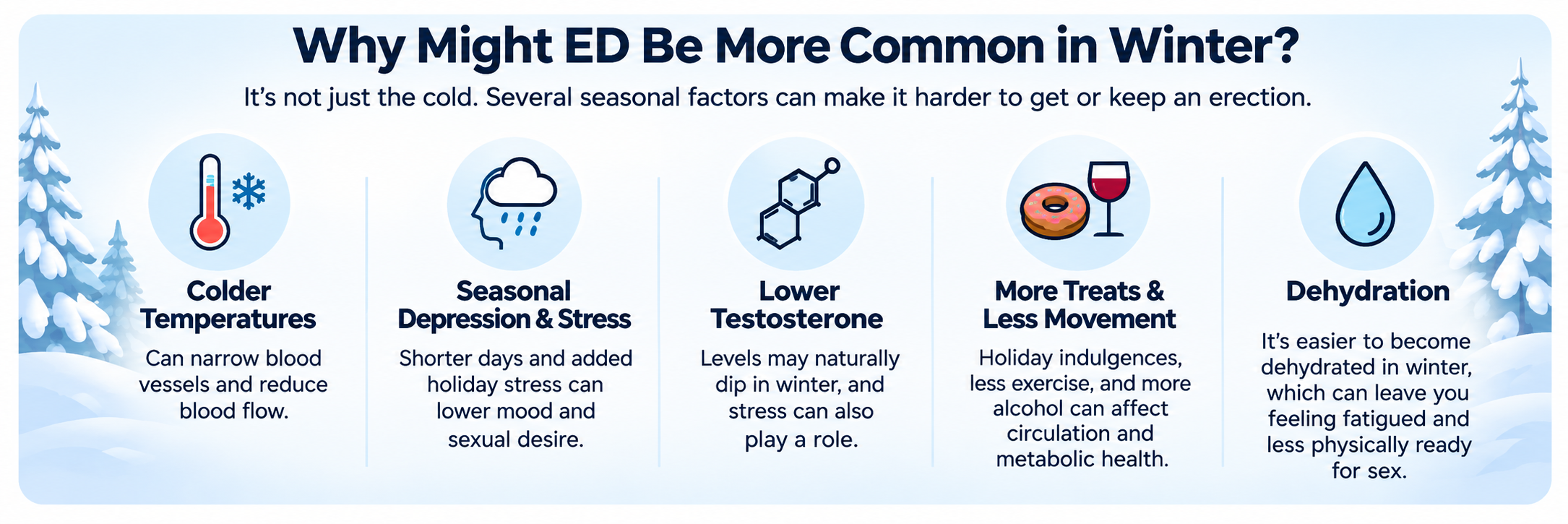
Essentially, your sympathetic nervous system springs into action. Blood vessels near the surface of your skin begin to narrow, a process known as **vasoconstriction**. This helps limit heat loss and maintain your body’s internal temperature.
That’s why your fingers, toes, and other exposed areas can feel especially cold in winter.
So, what does this have to do with erections?
Well, getting and maintaining an erection requires blood vessels in the penis to relax and allow more blood to flow into erectile tissue. When you’re exposed to cold temperatures, your body’s natural response is to narrow certain blood vessels rather than encourage increased blood flow.
Therefore, if you’re already dealing with circulation problems, high blood pressure, diabetes, or cardiovascular disease, those underlying conditions can make ED more likely to occur regardless of the season.
Many men don’t realize that issues with erections can sometimes be an early warning sign of cardiovascular disease. That’s because the blood vessels involved in erections are relatively small, so problems with blood flow may become noticeable there before other symptoms appear.
The winter months often mean holidays, family gatherings, and plenty of reasons to celebrate. But unfortunately, all that holiday cheer can also come with a fair share of stress, anxiety, and obligations.
Between buying gifts, managing finances, dealing with family, and keeping up with social obligations, it’s easy to feel overwhelmed.
And as a result, your testosterone levels may be feeling the effects, too.
When you’re stressed, your body releases cortisol, often called the stress hormone. While cortisol helps your body respond to stressful situations, prolonged stress can interfere with the hormonal processes involved in testosterone production.
A study examining seasonal testosterone levels found that men had their highest average testosterone levels between August and October, with levels gradually declining to their lowest point in March.
Although researchers haven’t established exactly why these seasonal changes occur, the findings suggest that testosterone levels aren’t necessarily the same throughout the year.
So, what does this mean for your erections?
Testosterone impacts sexual desire and erectile function. When your levels are clinically low, you may experience reduced libido, fatigue, and difficulty with erections.
Medically reviewed by:
Micheal Seay, MSN, APRN, FNP-BC
Michael Seay is a Board-Certified Family Nurse Practitioner (FNP-BC) with over 16 years of clinical experience in emergency medicine, urgent care, gastroenterology, geriatric care, and hormone optimization therapy for men and women. He holds a Master of Science in Nursing from Walden University and a Bachelor of Science in Nursing from Platt College School of Nursing. He is certified in hormone pellet placement and weight loss therapies, with a clinical focus on individualized, patient-centered care.
Related Posts
Disclaimer: This article is made available for general, entertainment and educational purposes only. The opinions expressed herein do not necessarily reflect those of Low T Center. You should always seek the advice of a licensed healthcare professional.